EHSI 2024 set out to test a model of institutional structure that would facilitate the integration of scholarship in the humanities with an engaged relationship with the land. Through this, it also aimed at cultivating a space in which the individual person of the scholar-worker might feel integrated in their various activities. By the land, we refer not only to the local nonhuman world in which the embodied lives of the scholars takes place, but also the historical context of that world, as it has been shaped by the intersecting actions of various human communities and nonhuman actors. The theme for this inaugural program was "Work, Land, Voice," which in a number of respects was a reflection on the presuppositions of this experiment itself. EHSI 2024 included a range of modes of action so that participants might personally experience various communication avenues between themselves and the land.
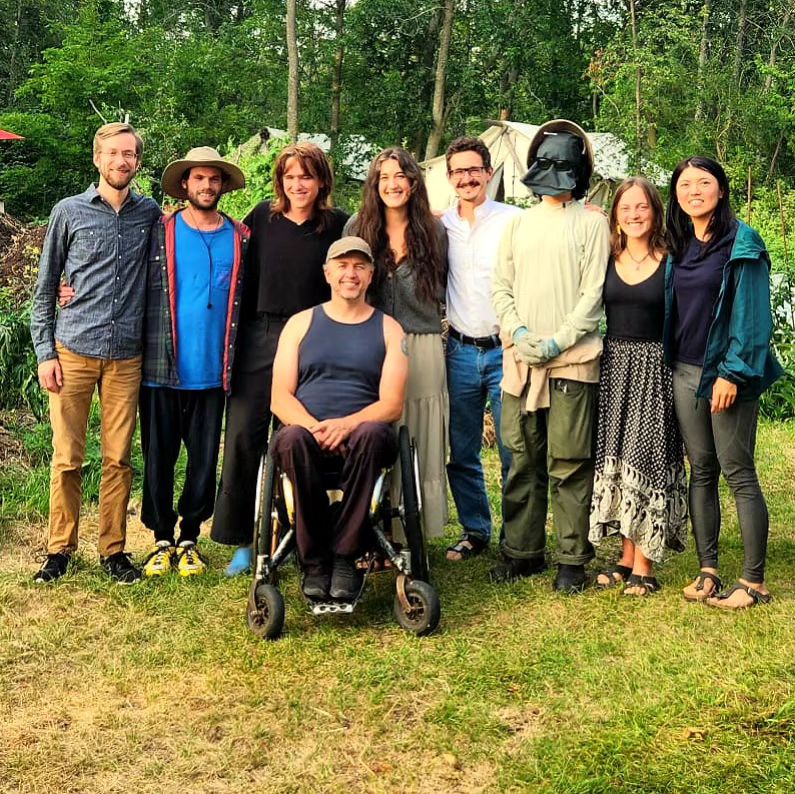
EHSI 2024 was co-organized and facilitated by Julia
Henderson and Philippe Mesly, who took part in all the same
activities as the participants. Four participants attended
the program, coming from across the country and the United
States to attend. Additionally, two resident farmers on the
site attended certain elements of the program, and so might
be considered "part-time" participants. Finally, various
people from the community and others just passing through
joined for open lectures, shared meals, or work projects.
The program featured the voices of numerous contributors:
Justin Tilson, Jan Zwicky, Tim Lilburn, Celeste Smith,
Sophie Edwards, Josh To, and Christie Wong. We are grateful
to all of them.
The program was hosted on
Manitoulin Permaculture's 4-acre homestead near Little Current, Ontario, which
includes various subspaces for growing, cooking, living and
working. The program ran from July 8-26. Each participant
was accommodated in a private cabin or trailer. Groceries
were provided or harvested from the gardens onsite, and all
cooking was undertaken by the participants.
Participants woke up daily at their own pace so as to be
ready to begin work at 8am. For four hours most mornings, we
took on various work projects on the site. From 12 to 1:30,
participants prepared their lunches, chatted, or took care
of small personal tasks. At 1:30, we entered into a
"library" atmosphere, in which participants prepared for
seminar discussions by reading, taking notes, or writing
reflections. If a seminar was scheduled for the day, it
began at 4 and usually ran to 6:15-6:30. If not, the study
periods continued until 4:30, at which point participants
might keep reading, begin preparing for dinner, or were free
to do anything else. Dinner was usually ready around 7:00,
after which the evening was open. Throughout the program,
participants agreed not to use any electronic devices from
8am to 7:30pm daily.
Variations from this daily rhythm are noted in the weekly
recap below.

In our first week, we opened with some preliminary
discussions of our backgorunds, interests, and
preoccupations. We broached the theme of "Work, Land,
Voice," noting especially how it relates to the practices we
would be undertaking for the coming three weeks. We
established some of the basic housekeeping and introduced
our principles for convivial seminar discussions.
We got a tour of the property from Justin Tilson, the
organizer of
Manitoulin Permaculture, as well as a presentation introducing the principles of
permaculture.

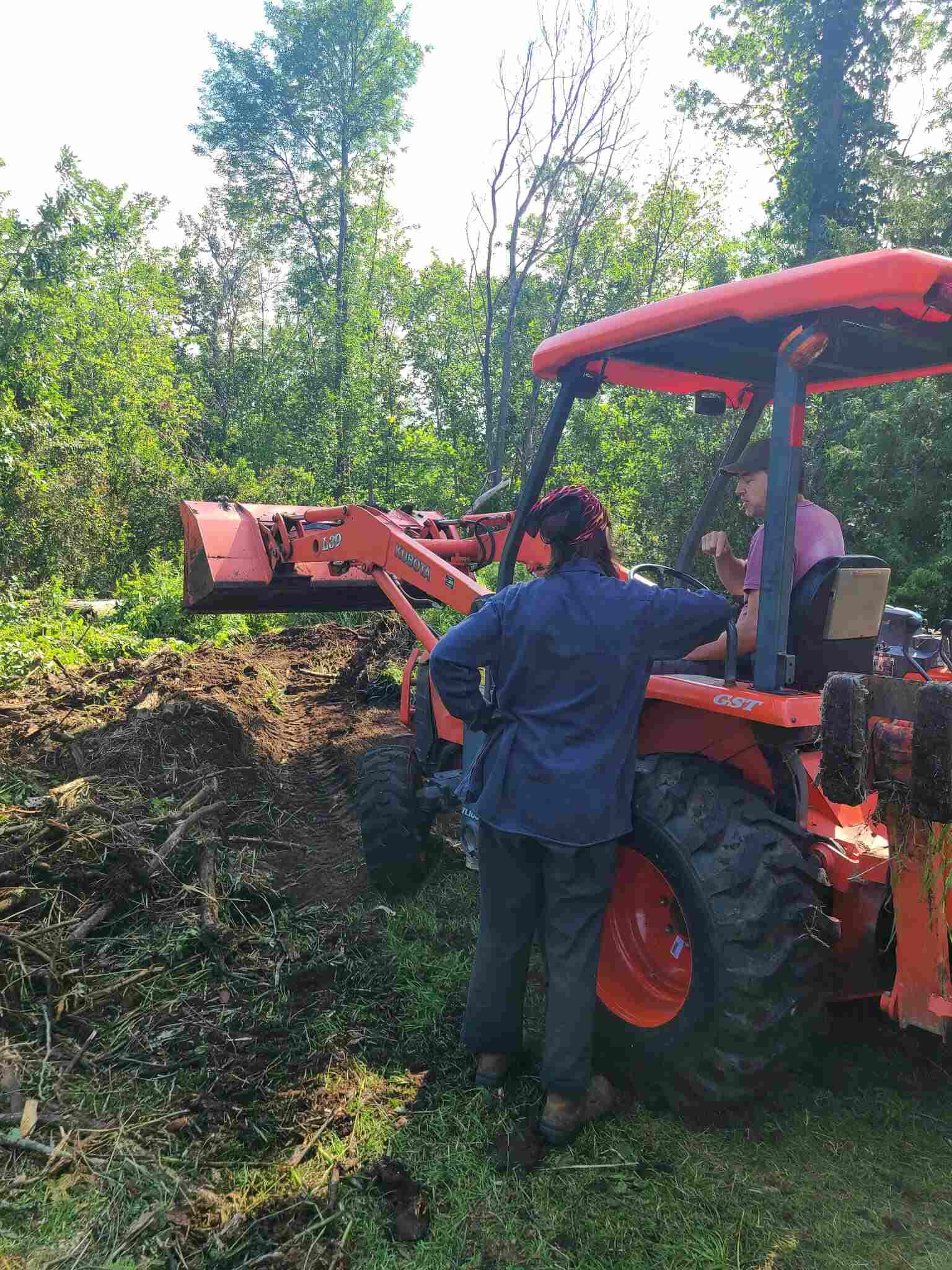
Our work this week consisted of establishing a new asparagus
patch, starting by clearing a grassy area, tilling, weeding,
and amending the soil, planting the baby asparagus, and
mulching them in. In passing, we potted up several dozen
Siberian peas, black locusts, and rhubarb plants; replaced
some broken tool handles; repaired a lawn mower; and built a
stone foundation for a leaning arbor.
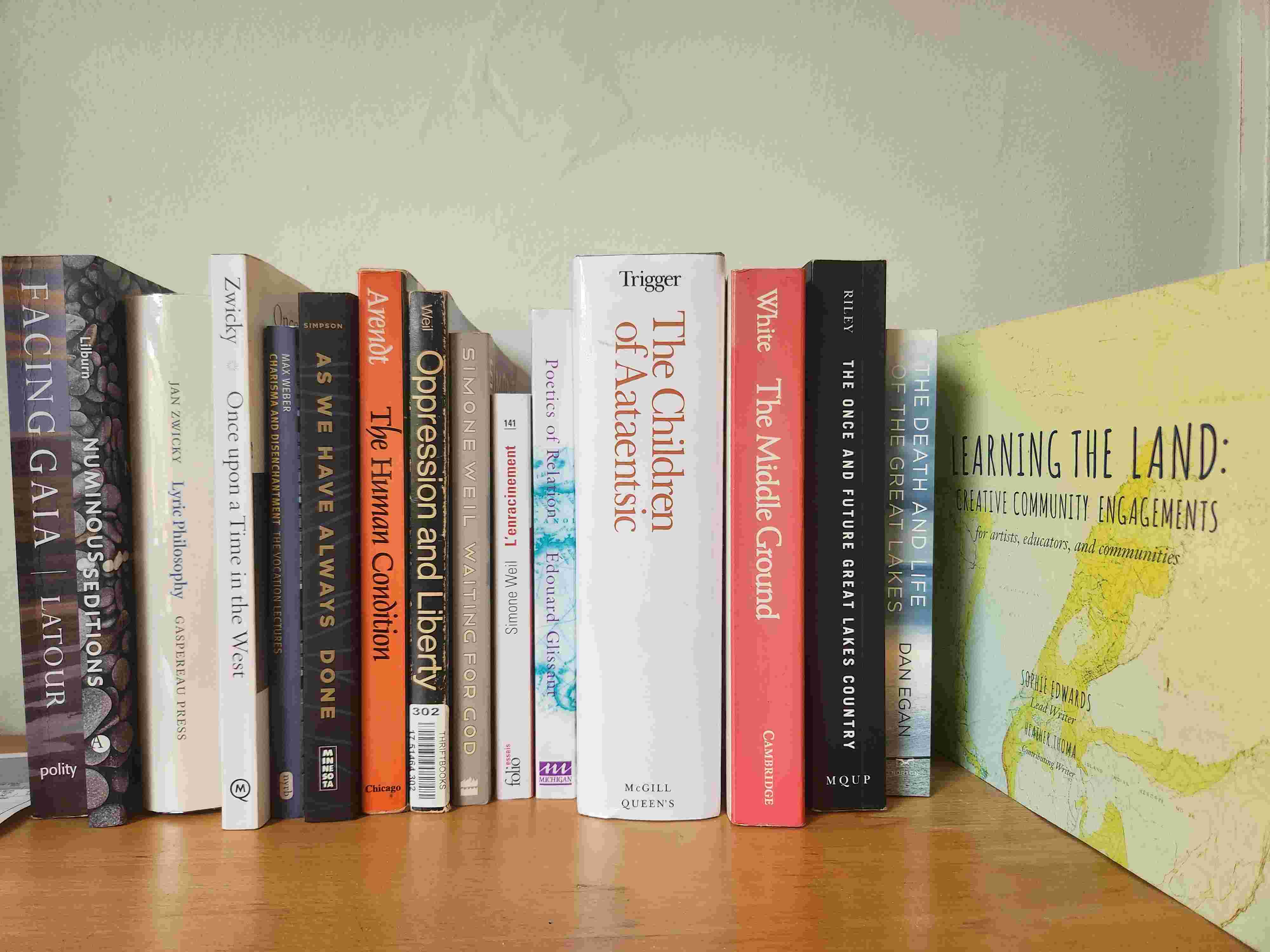
On Tuesday, Julia facilitated the first seminar discussion
in her series focusing on Simone Weil, whose spiritual and
political writings grapple in particular with the concept of
work. The first session dealt with her notion of "reading"
as a way of relating to the world, and a selection from
Waiting for God that examines various modes of love,
including attention to beauty, justice, and friendship.
On Thursday, Philippe facilitated a seminar pairing Max
Weber's "The Scholar's Work" with Leanne Betasamosake
Simpson's "Land as Pedagogy." We explored the overlap and
the differences between the versions of education they
describe. In particular, we examined the tension between
meaning and knowledge, and the place of intellectual culture
in community.

On Friday, we took the afternoon off for a hike on the
Cup & Saucer trail. We read the Anishinaabe story of how Nanabozhou came to
the island, dropping his spearhead and handle, which left
the limestone outcropping as it is. We stopped in various
places along the trail also to read poetry and prose from
Jan Zwicky
and
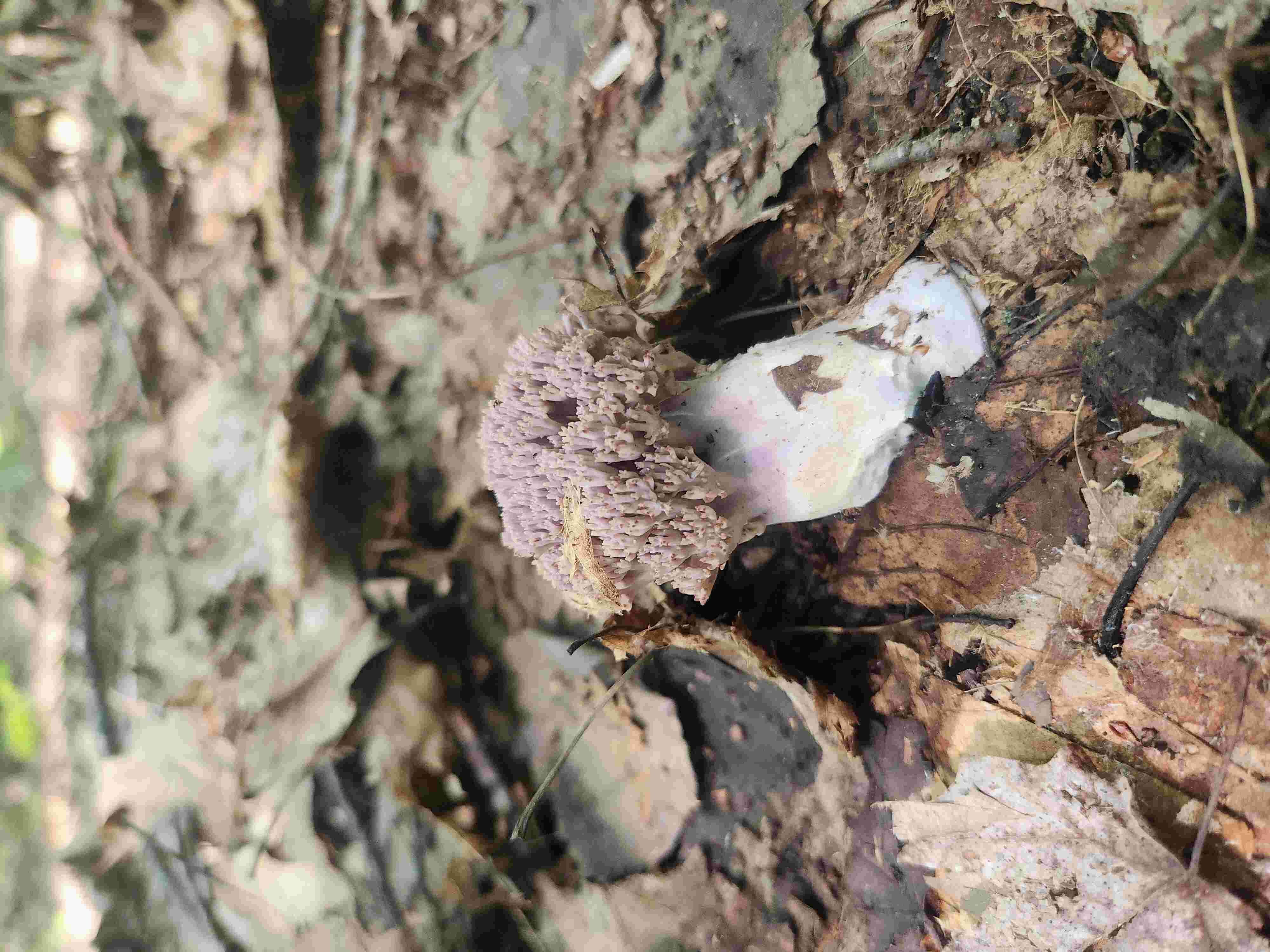
Tim Lilburn, and in so stopping, identified about 15 unique species of
mushroom.
That evening, Jan and Tim joined us over Zoom to talk about
the historical precedent for combining work, study, and
contemplation. They outlined the difficulties of balancing
this in today's world, as well as its pressing political
function. And they shared some of their own poetry and ideas
while also inviting thoughts and responses from us.
After a weekend break, during which participants attended
the local
Weengushk Film Festival, visited the Little Current Farmer's Market, went to the
beach at Providence Bay, or just relaxed and did some
gardening at the homestead, we dove right back into our
rhythm.
The work projects during week 2 involved establishing a
haskap berry patch, similar to last week's asparagus patch.
We learned that these delicious local berries require
different cultivars in the same location to pollinate
effectively, so we alternated two different kinds of plants
in a lovely curving design suited to the location. We used
recycled cardboard and cedar shavings for mulch. At the same
time, we cleared several dead trees from the property and
chopped them into logs for the wood burning stove, or if
they were too big or too small, to establish a new
hugelkultur bed. We repaired a mailbox that was knocked down
by a reckless driver, fixed a wobbly handrail on a wooden
bridge, and installed a new electrical outlet in the
kitchen. Invasive phragmites were identified and removed
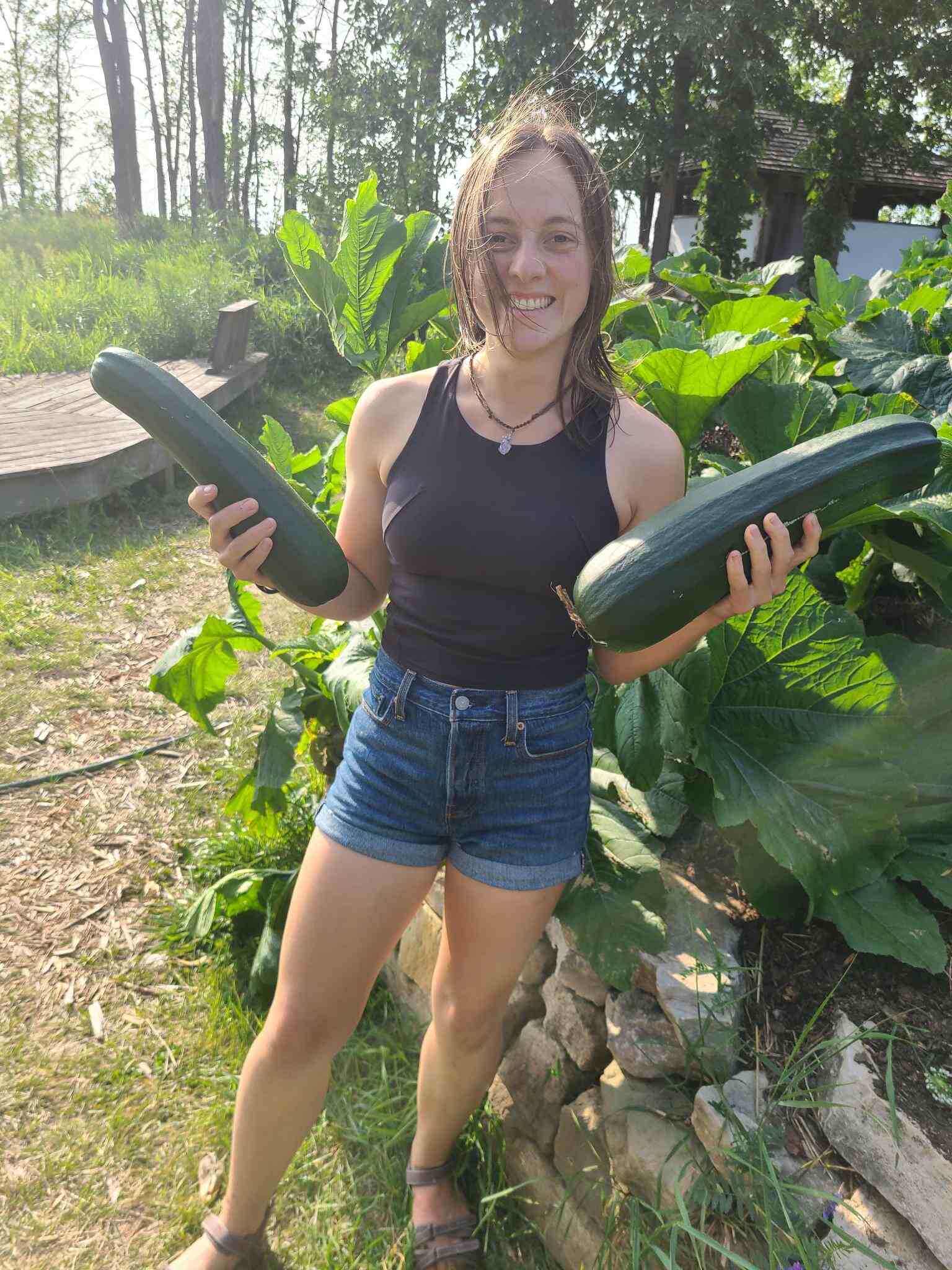
along the shoreline. We also harvested several crops,
processed berries for a jam, and got to enjoy cooking with
those local ingredients.
On Monday, Julia reprised her seminar on Simone Weil,
looking this time at her writings on the intersection of
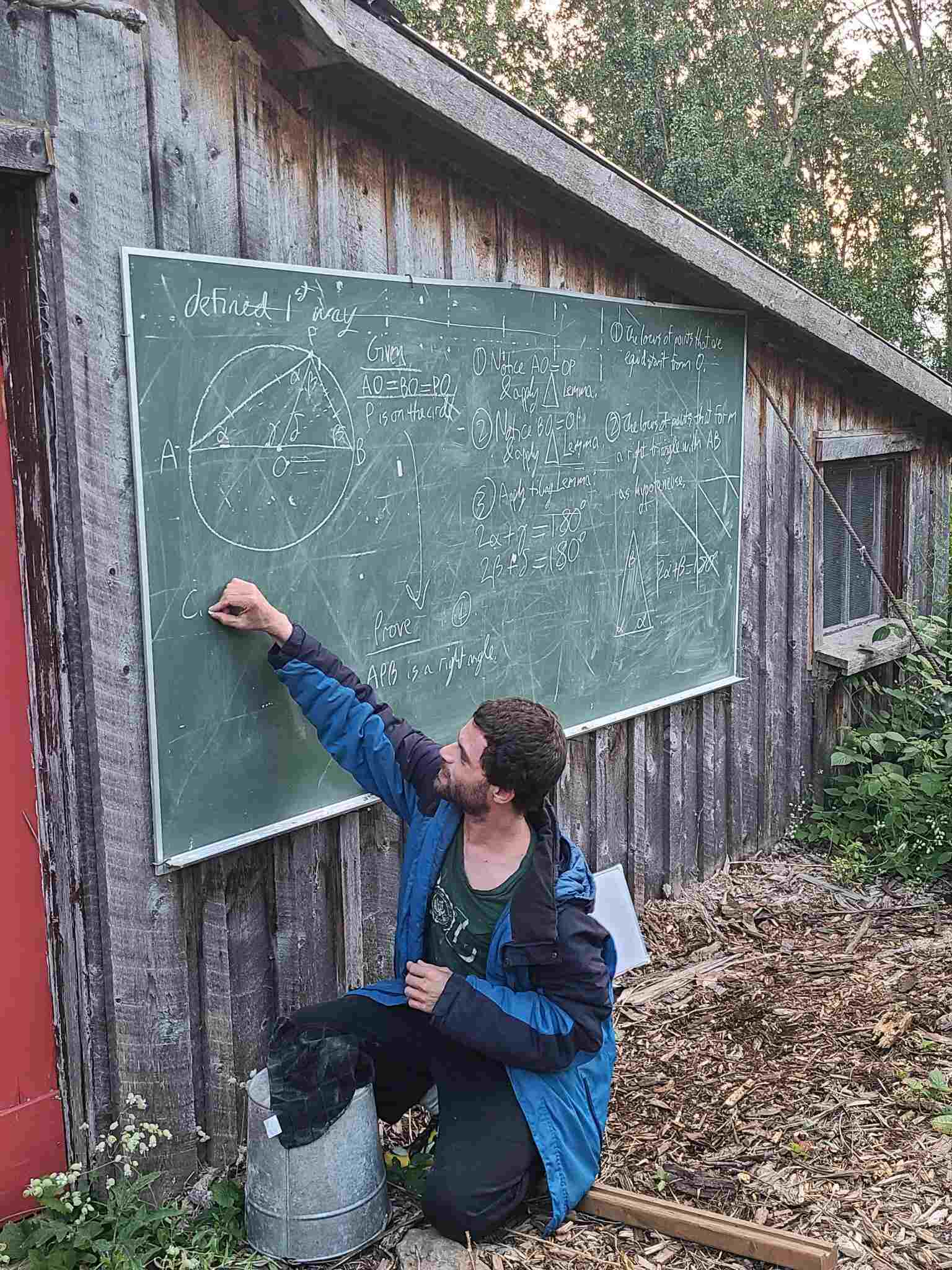
mathematics, ethics, and metaphysics. (Later on, this led to
a spontaneous lecture on mathematics by one of our
participants, a
scholar
of Applied Category Theory.) We debated the merits and
limitations of spiritual writing, and explored the nature of
creativity and creation.

This segued nicely into a field trip on Tuesday to the
Kagawong river, where
Sophie Edwards
led an arts workshop, in which we attended to the sights,
sounds and relationships present in this beautiful body of
water. We used charcoal and watercolours to explore not only
the patterns, textures, sounds, and connections in the
environment, but also how the medium itself is heard in our
art practices. Sophie tied our practice to the history of
Indigenous presence, treaty-making, and colonization in the
area, and gave context for the sculptures along the
riverside trail. The workshop concluded with a swim at the
base of the Bridal Veils waterfall.
On Thursday, Philippe led a conversation on Hannah Arendt's
disctinction between work and labour. We explored the way
our treatment of the natural world differs according to our
different activities, and the different values associated
with different lifestyles. And we observed how the same
activity might be treated differently and offered varying
levels of dignity in different historical and political
contexts.

On Friday, we were welcomed to
Ga Gitigemi Gamik, or We Will Plant Lodge, a new project on Manitoulin which
seeks to revive traditional Indigenous agricultural
practices, particularly for Indigenous women. Celeste Smith,
the organization's director, treated us to homemade
sweetgrass tea and spoke to us of the challenges faced by
Indigenous people today, what led her to Manitoulin Island
and the Lodge, and the work she is currently doing in
education and activism. We participated in the life of the
Lodge by helping with various tasks including clearing and
leveling an outdoor gathering space, setting up shade
structures, and doing work in the greenhouse.
That evening, some of us enjoyed a lovely dinner on the
marina, followed by live music and a swim at the beach.
We regrouped again for the final week after another relaxing
weekend checking out the shops and restaurants in Little
Current, going for swims in the North Channel, and otherwise
resting up.
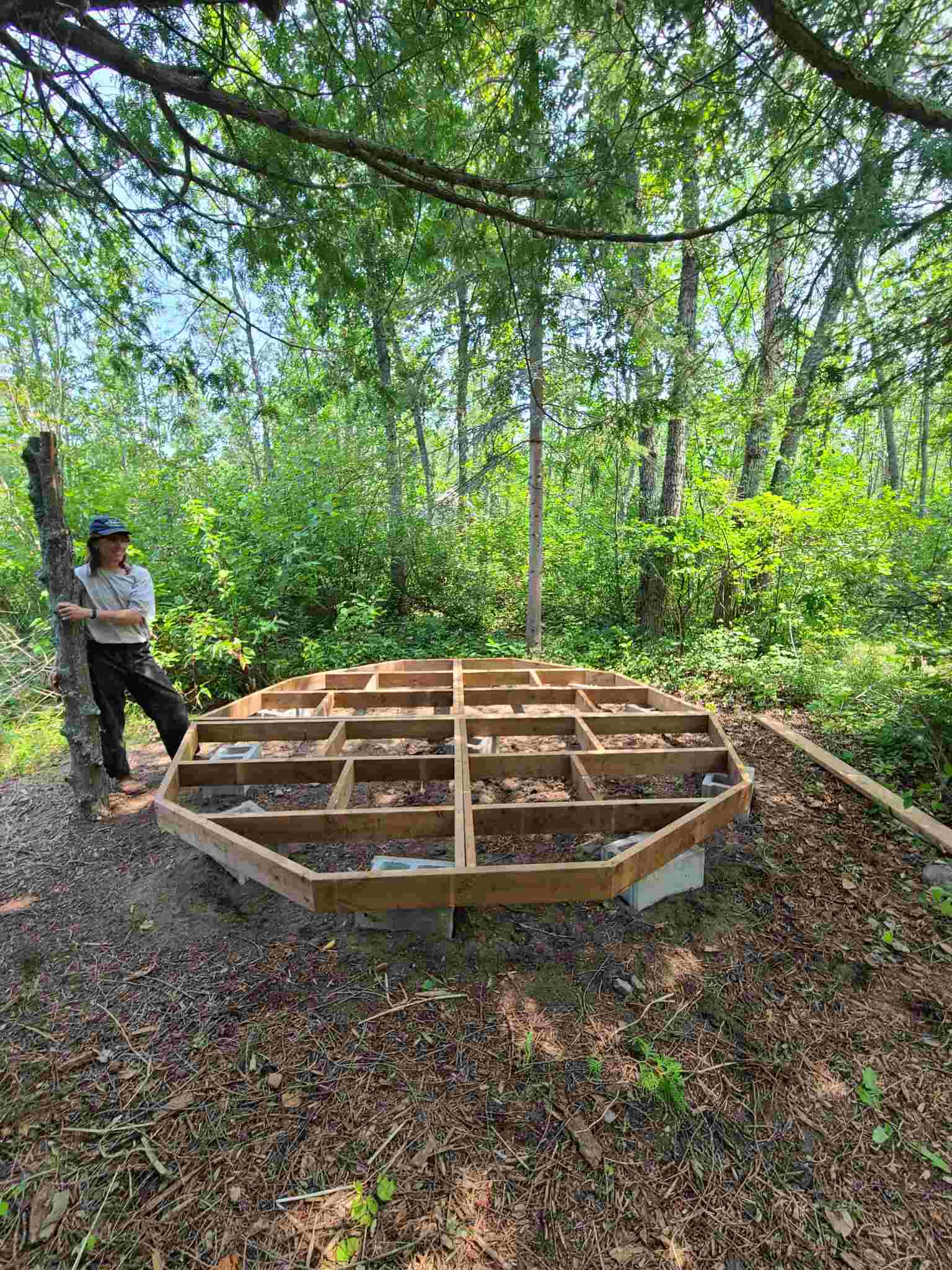
In the third week, we accomplished the completion of the
hugelkultur bed, the establishment of a rhubarb bed along
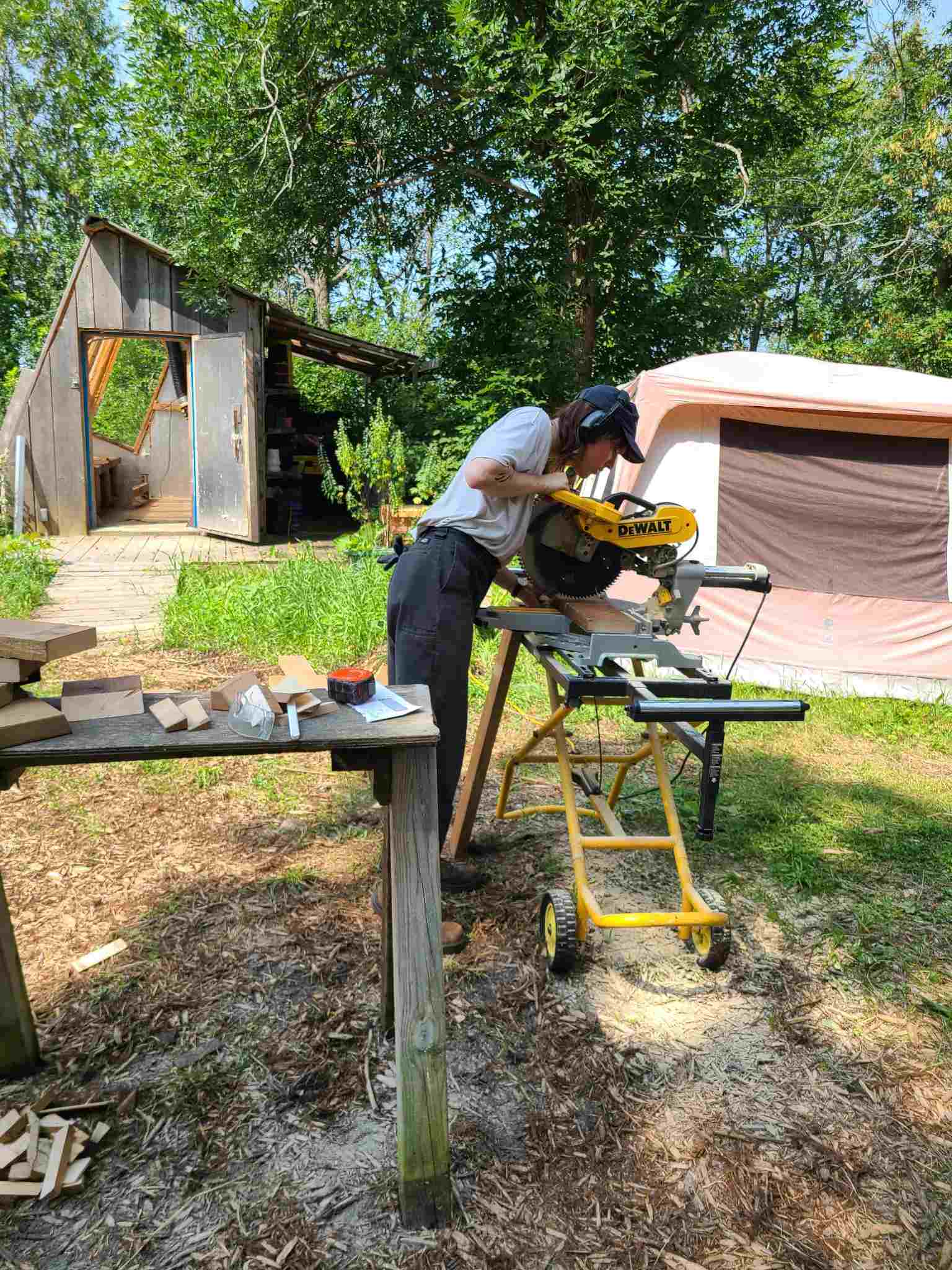
the edge of the driveway, and the construction of a platform
that will act as the base for a new cabin that will allow
for more accommodations in the future. Some participants
also went out on short work visits to help with other
community members' gardens.
In Julia's final session on Simone Weil, we read from her
political writings, especially The Need for Roots,
relating her work to the upheavals of her time and asking in
what ways they parallel ours. We returned to the question of
community, while asking what the implications of a rooted
political community would mean for technology, science,
administration, and education. In particular, we became
interested in the appropriate level of specialization in
society, and in the need to clarify our goals for political
action.
On Wednesday evening,
Christie Wong
and
Josh To
joined us over Zoom to discuss Indigenous and peasant
agricultural movements. They related our work in Canada to
other projects around the world, and shared their own
personal experiences of learning from the land. In
particular, they emphasized the role of narrative in
changing perceptions and discussed how media advocacy can
support community projects.
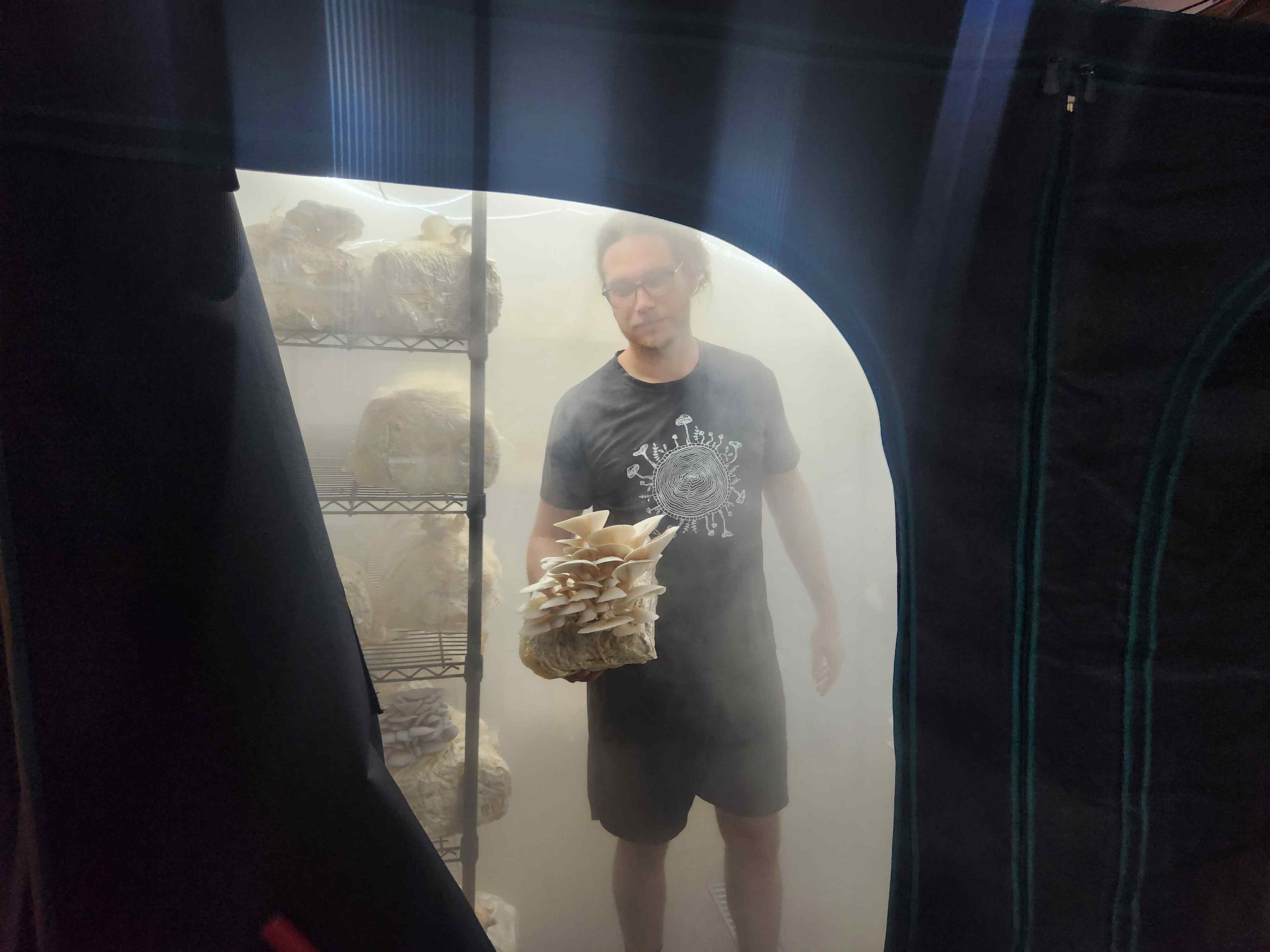
On Thursday, we received an impromptu tour of
Heartwood Mushrooms, a enterprise that grows mushrooms using largely
by-products of industrial processes. Shane O'Donnell, the
founder of Heartwood, shared his vast knowledge of fungus
biology & culture, and put us to work building outdoor beds
for continued growing of mushroom cultures after the main
harvest has passed.
Later on Thursday, Philippe facilitated a final seminar
discussion on a paired reading of Édouard Glissant and Bruno
Latour, in which we addressed the major social and
environmental implications of a globalized world. We focused
on the need for translation and diplomacy in a pluralist
world where a common ground is never a given. And we
considered the challenges of giving voice to
underrepresented cultures and the nonhuman world,
specifically through fostering an "aesthetics of the earth."
On Friday, after a final work session in the morning, we
spent the afternoon reflecting on the experience and
preparing to head out, whether back home or to another
venture. After the concerted efforts and restrictions of
three weeks' thinking, working, and communal living, we
capped the night with a large feast and festivities.